When a dealership sells a used car, the profit usually comes from multiple layers, not just the sticker price.
Here’s how the business model typically works:
How Used Car Sales Businesses Work

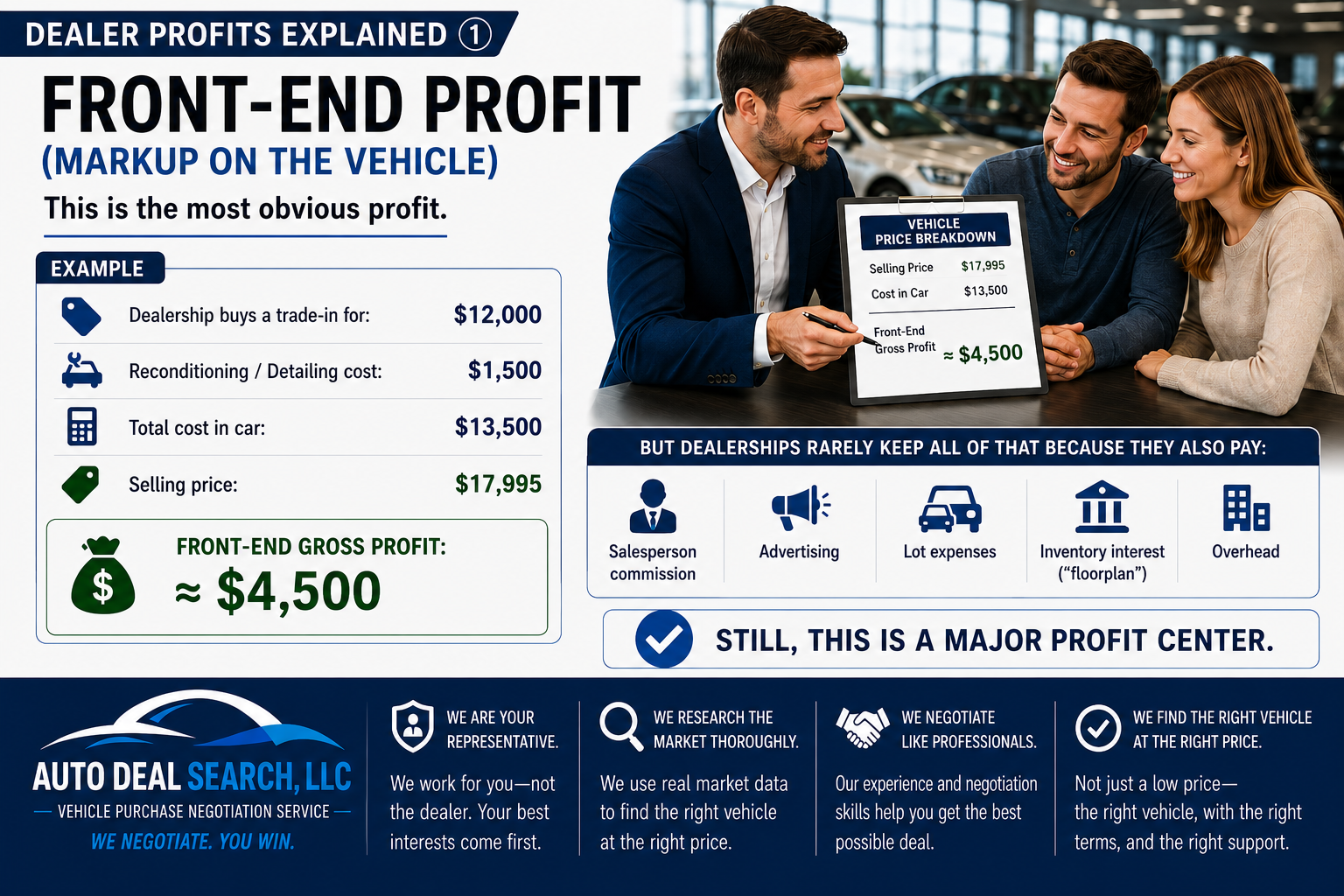
1. Front-end profit (Markup on the vehicle)
This is the most obvious profit.
(Example)
Dealership buys a trade-in for : $12,000
Reconditioning / Detailing cost : $1,500
Total cost in car : $13,500
Selling price : $17,995
Front-end gross profit : ≈ $4,500
But dealerships rarely keep all of that because they also pay : Salesperson commission, Advertising, Lot expenses, Inventory interest (“floorplan”), Overhead
Still, this is a major profit center.
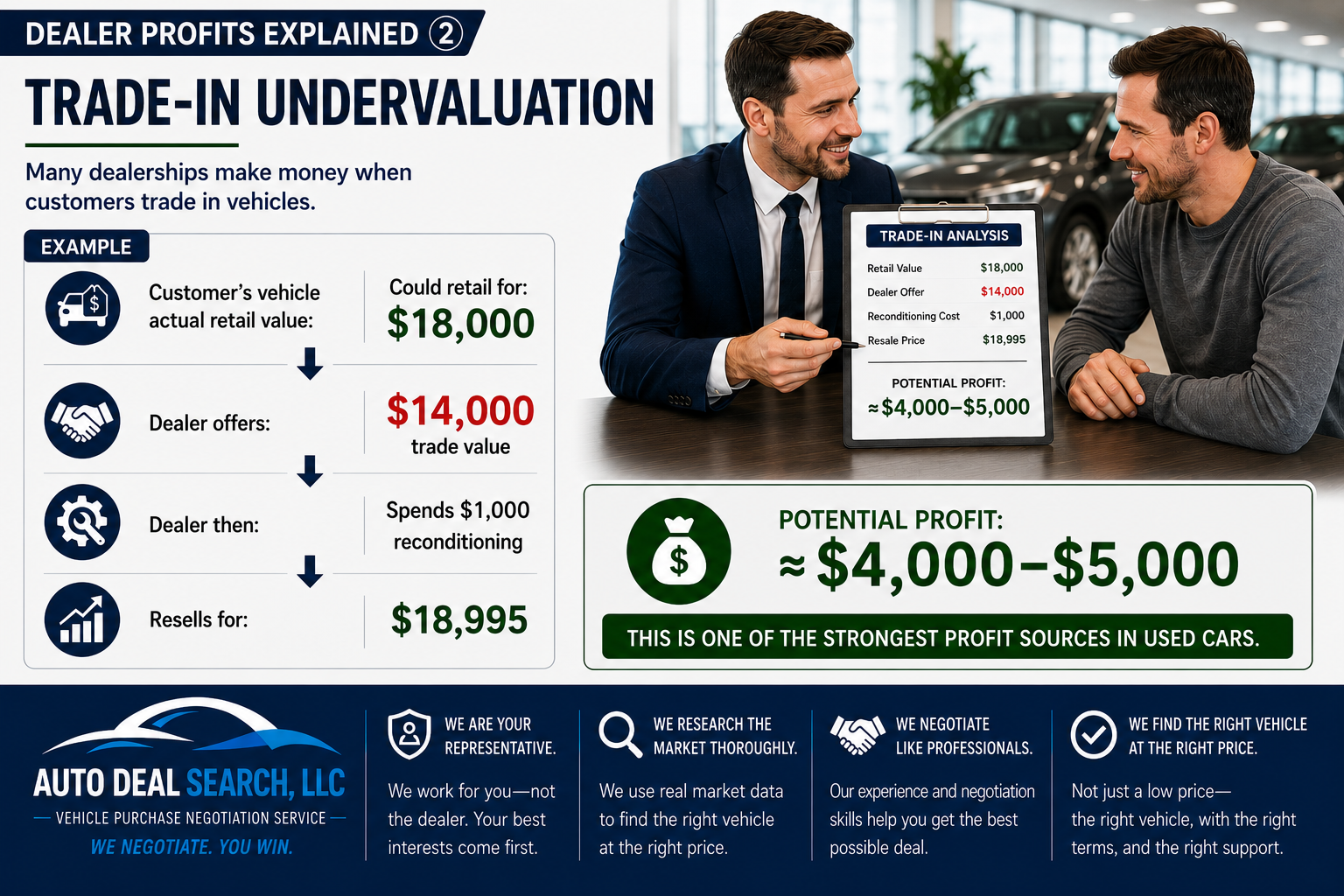
2. Trade-in undervaluation
Many dealerships make money when customers trade in vehicles.
(Example)
Customer’s vehicle actual retail value
Could retail for : $18,000
Dealer offers : $14,000 trade value
Dealer then : Spends $1,000 reconditioning
Resells for : $18,995
Potential profit : ≈ $4,000–$5,000
This is one of the strongest profit sources in used cars.
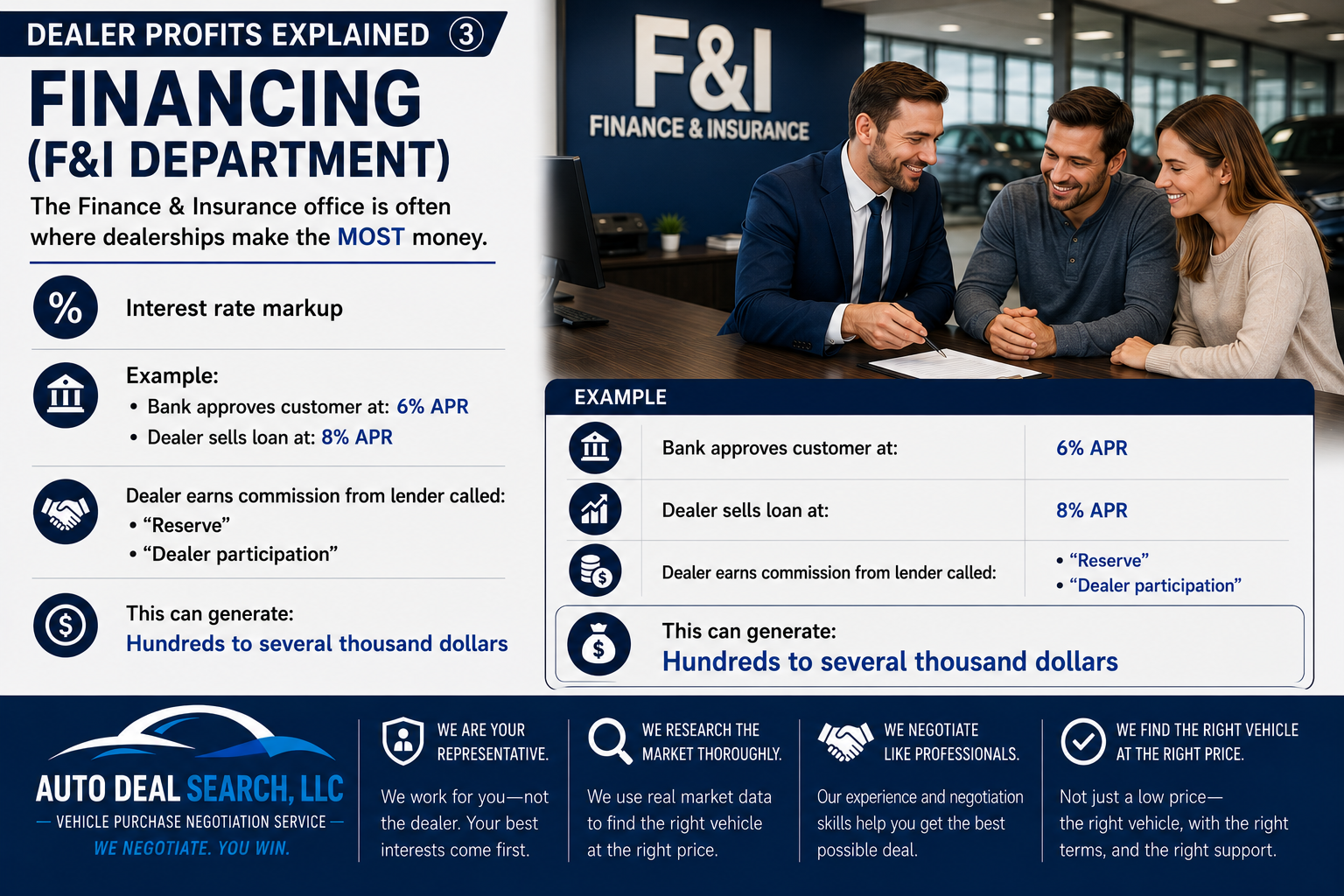
3. Financing (F&I department)
The Finance & Insurance office is often where dealerships make the MOST money.
Interest rate markup
(Example)
Bank approves customer at : 6% APR
Dealer sells loan at : 8% APR
Dealer earns commission from lender called : “Reserve”, “Dealer participation”
This can generate : Hundreds to several thousand dollars
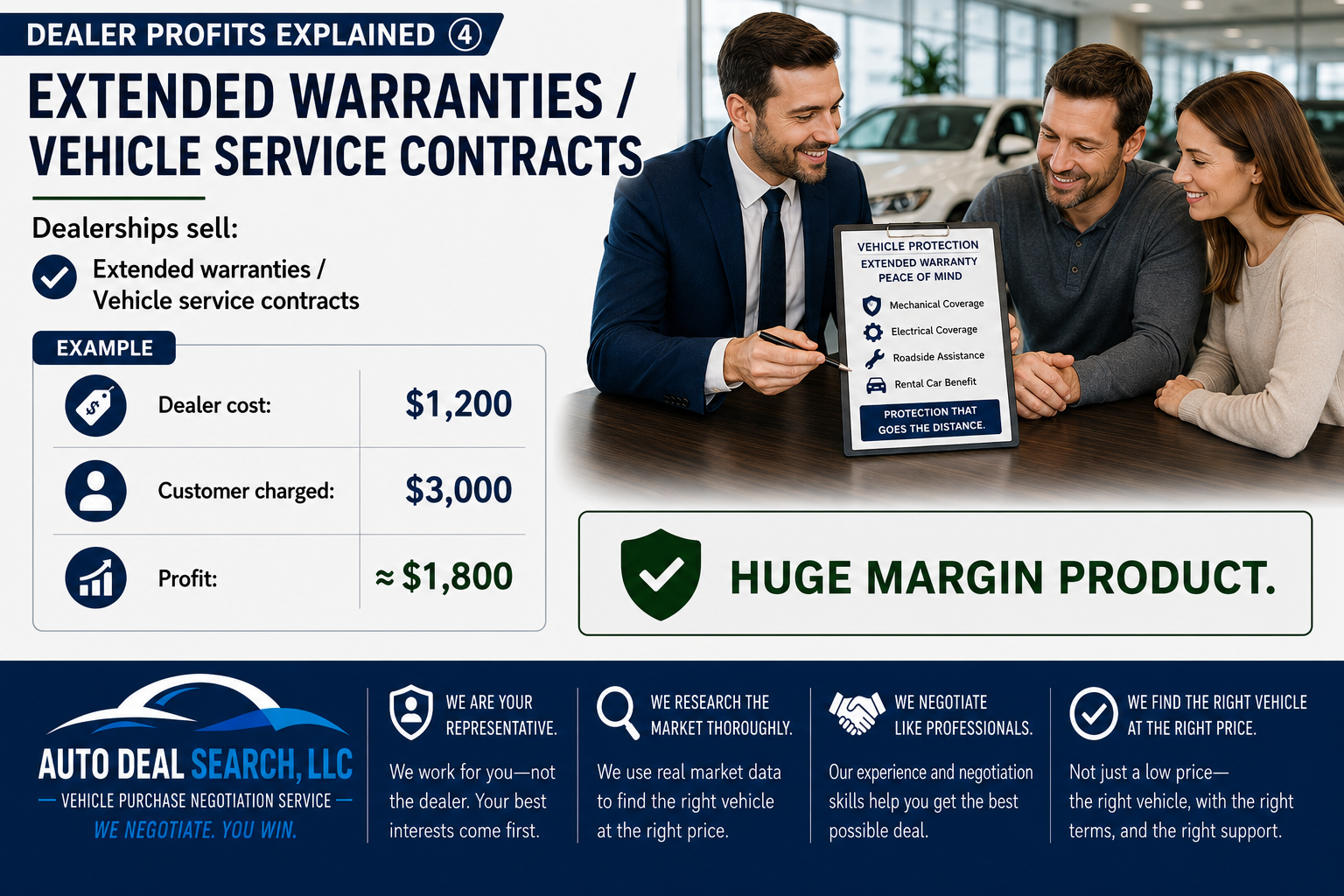
4. Extended warranties / Vehicle service contracts
Dealerships sell : Extended warranties / Vehicle service contracts
(Example)
Dealer cost : $1,200
Customer charged : $3,000
Profit : ≈ $1,800
Huge margin product.
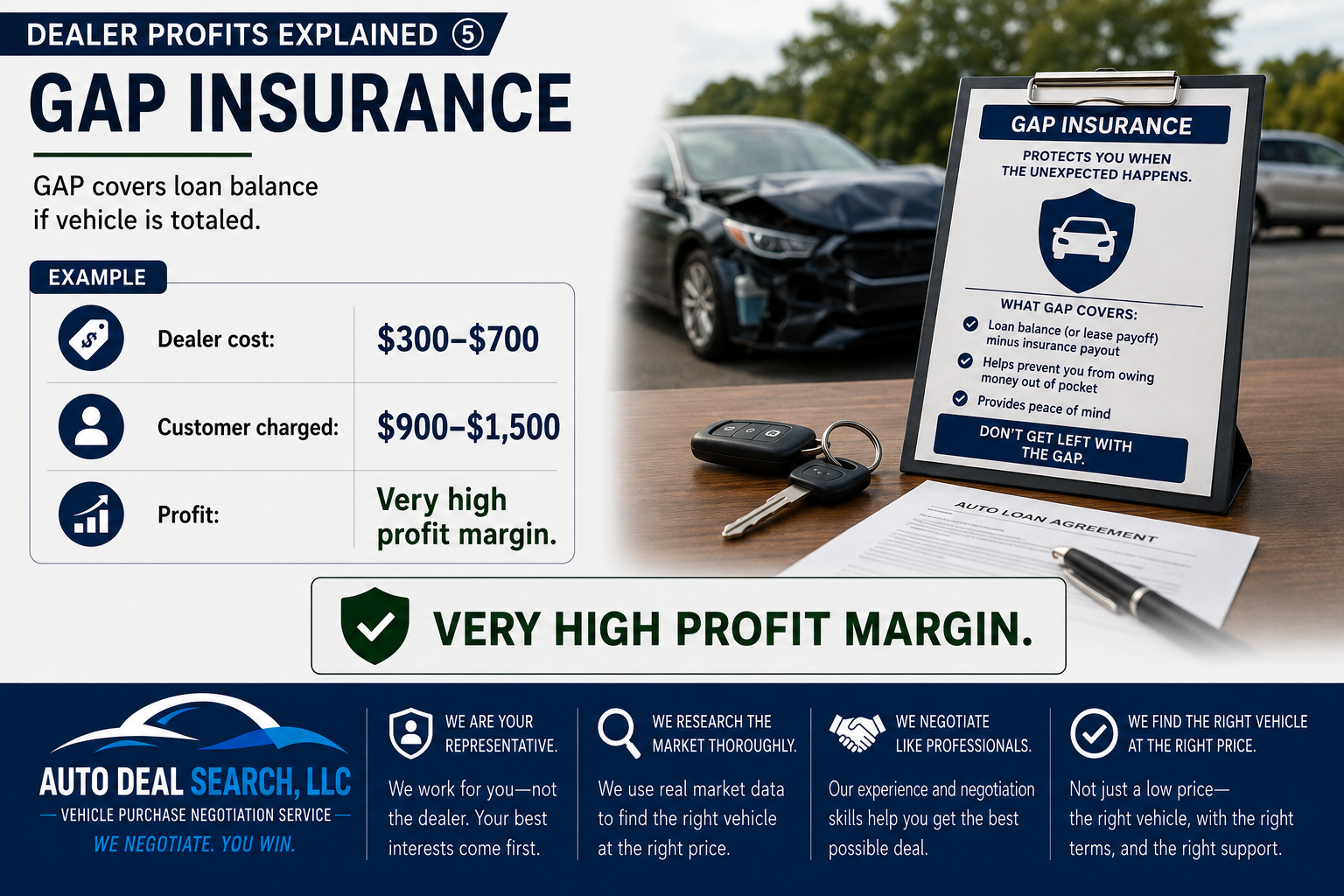
5. GAP Insurance
GAP covers loan balance if vehicle is totaled.
(Example)
Dealer cost : $300–$700
Customer charged : $900–$1,500
Very high profit margin.
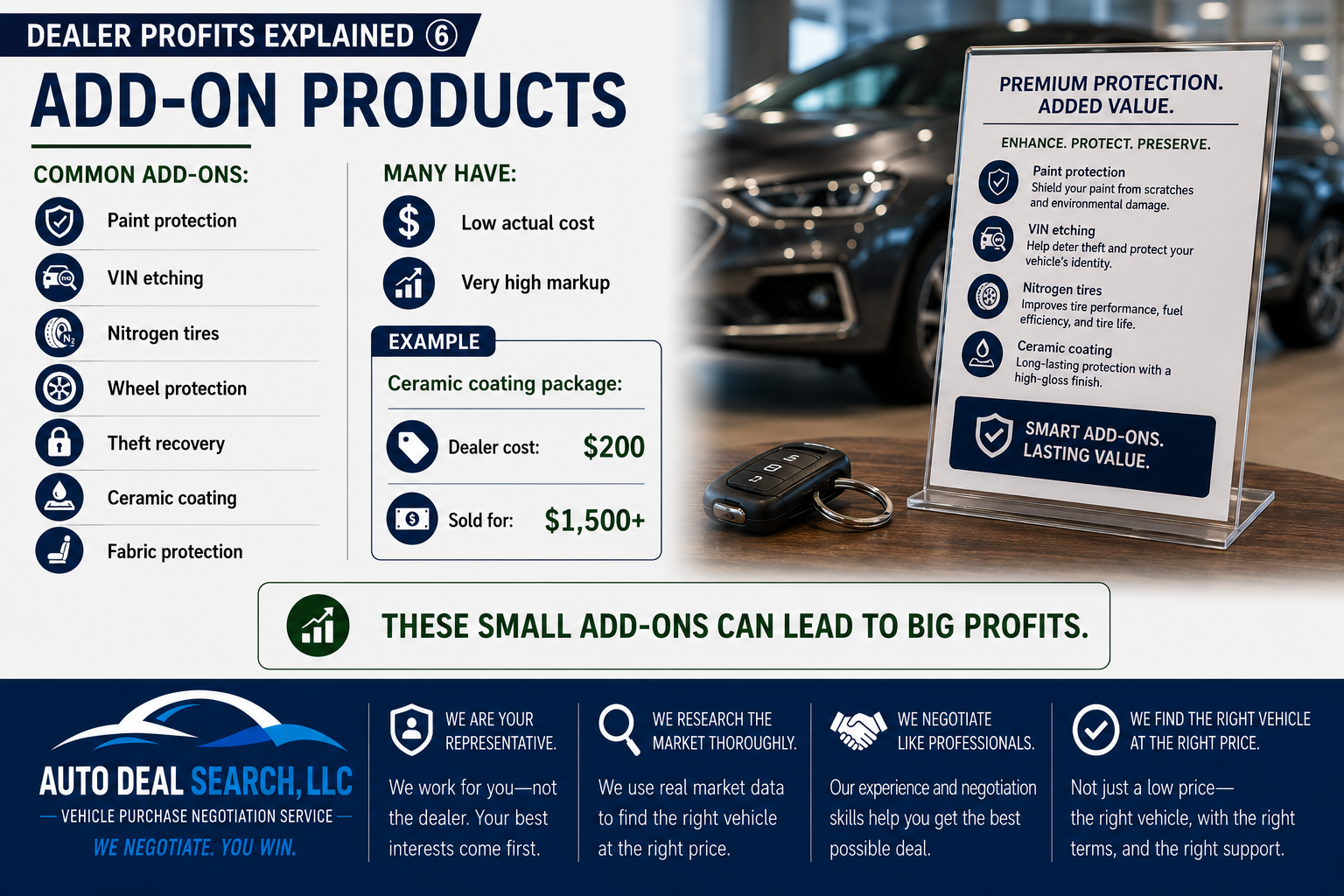
6. Add-on products
Common add-ons : Paint protection, VIN etching, Nitrogen tires, Wheel protection, Theft recovery, Ceramic coating, Fabric protection
Many have : Low actual cost, Very high markup
(Example)
Ceramic coating package
Dealer cost : $200
Sold for : $1,500+
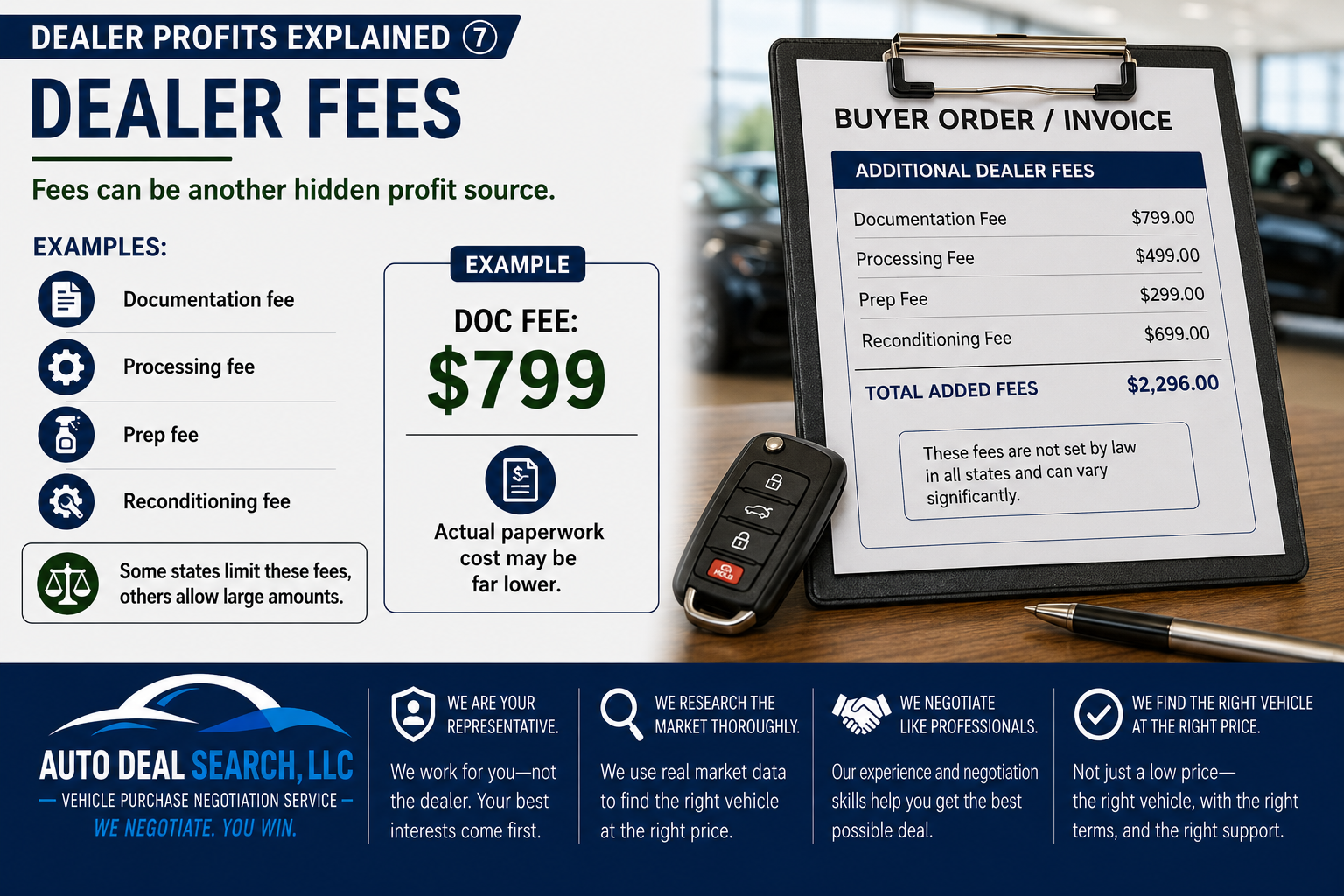
7. Dealer fees
Fees can be another hidden profit source.
(Examples)
Documentation fee, Processing fee, Prep fee, Reconditioning fee
Some states limit these fees, others allow large amounts.
(Example)
Doc fee : $799
Actual paperwork cost may be far lower.
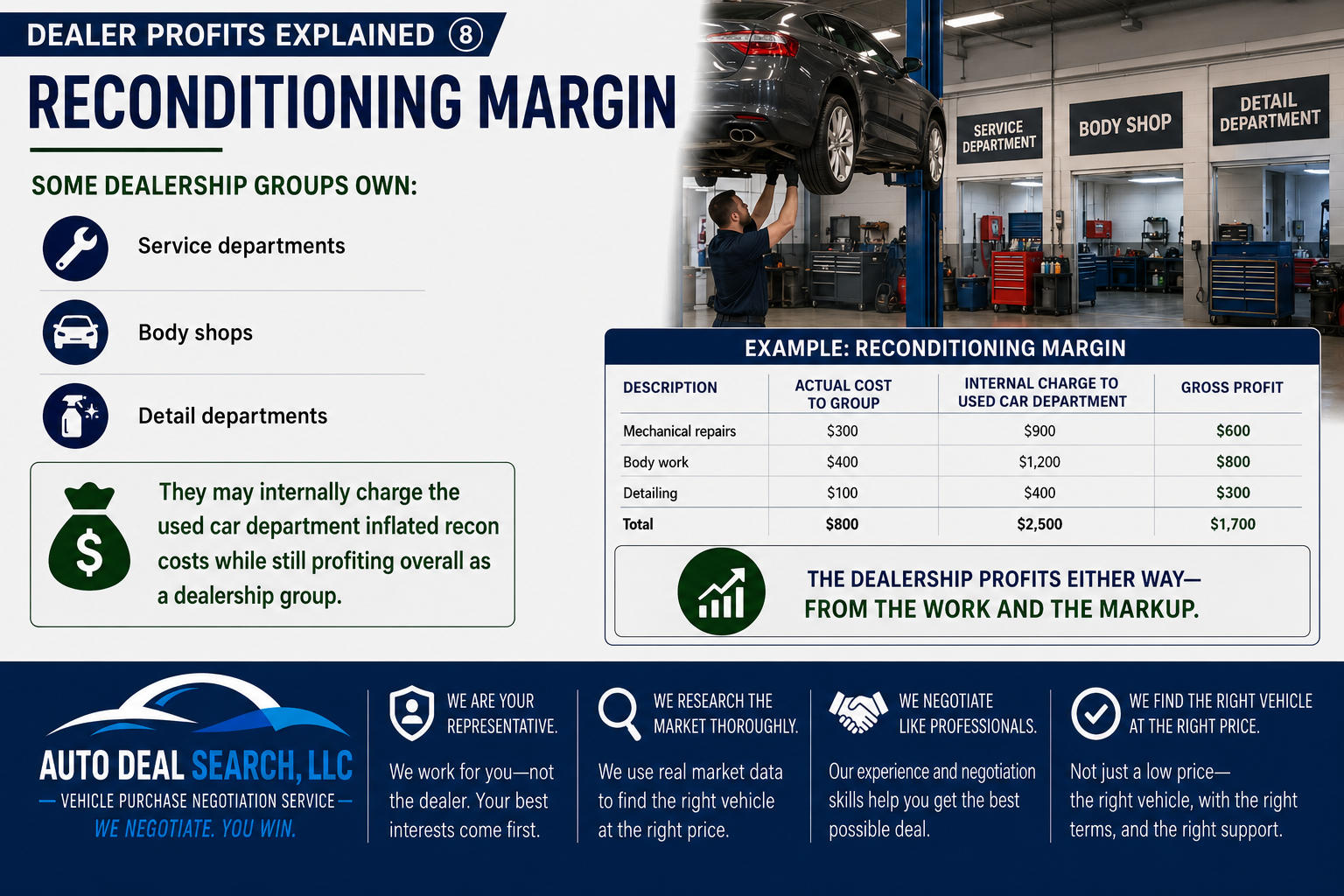
8. Reconditioning margin
Some dealership groups own : Service departments, Body shops, Detail departments
They may internally charge the used car department inflated recon costs while still profiting overall as a dealership group.
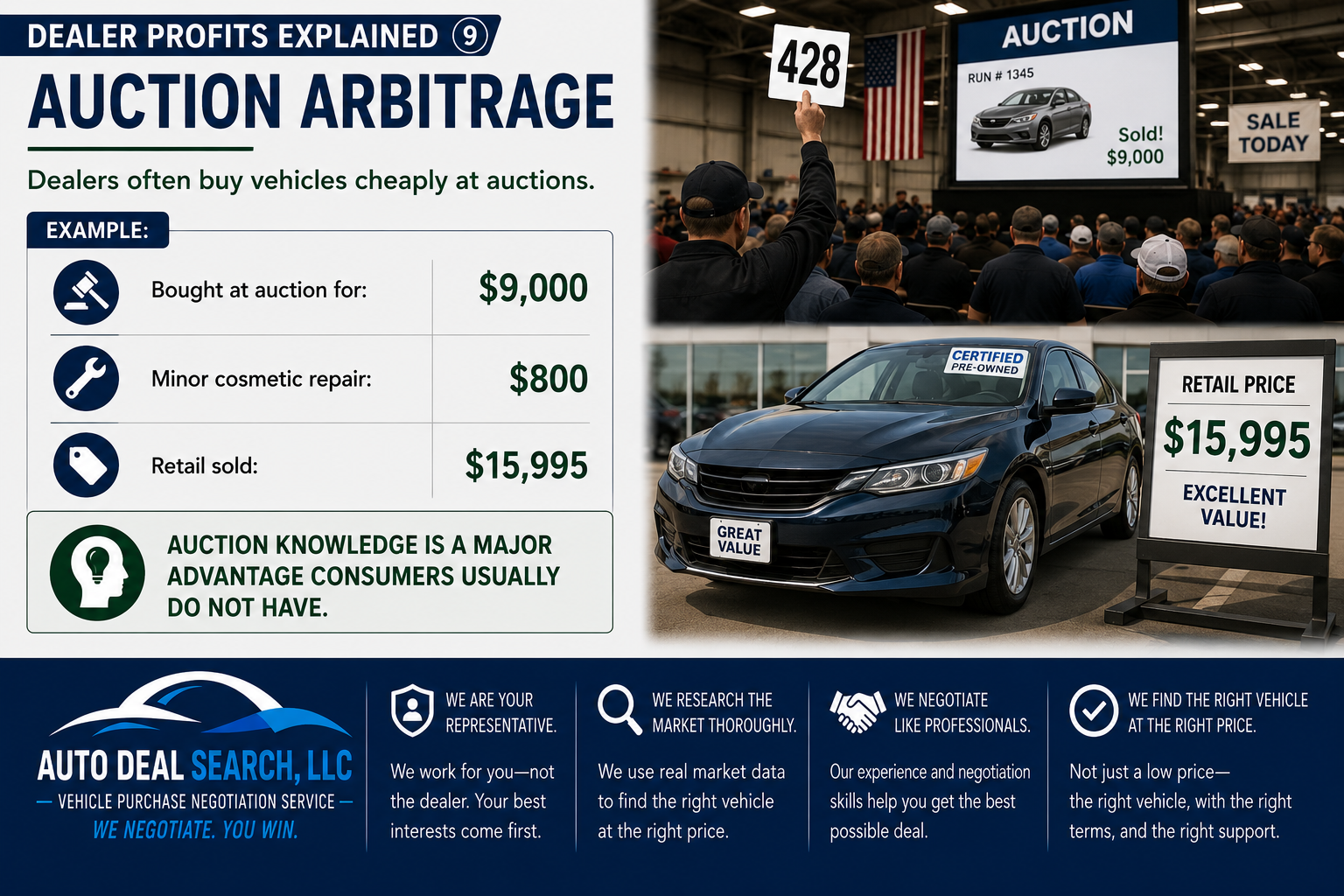
9. Auction arbitrage
Dealers often buy vehicles cheaply at auctions.
(Example)
Bought at auction for : $9,000
Minor cosmetic repair : $800
Retail sold : $15,995
Auction knowledge is a major advantage consumers usually do not have.
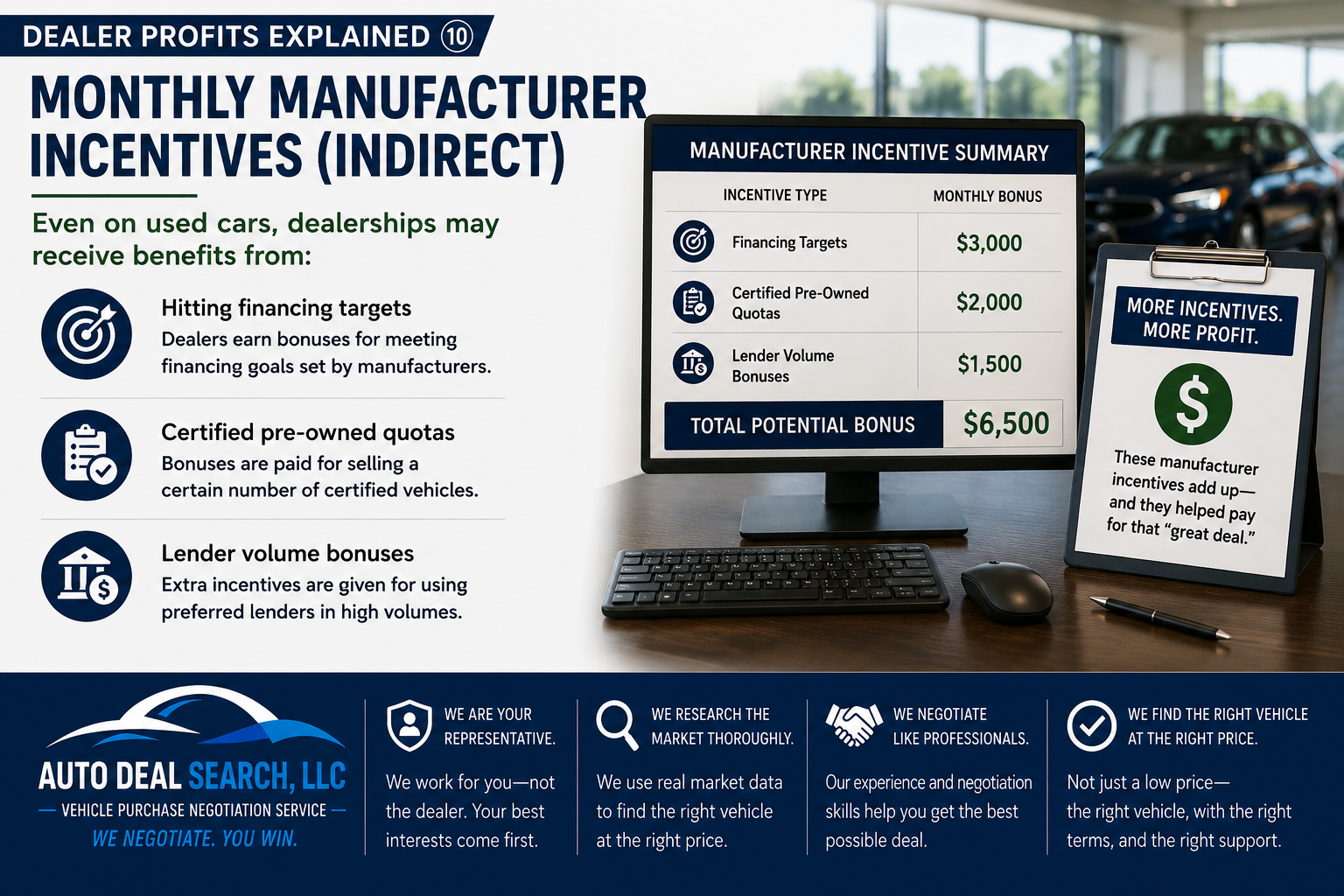
10. Monthly manufacturer incentives (Indirect)
Even on used cars, dealerships may receive benefits from : Hitting financing targets, Certified pre-owned(CPO) quotas, Lender volume bonuses
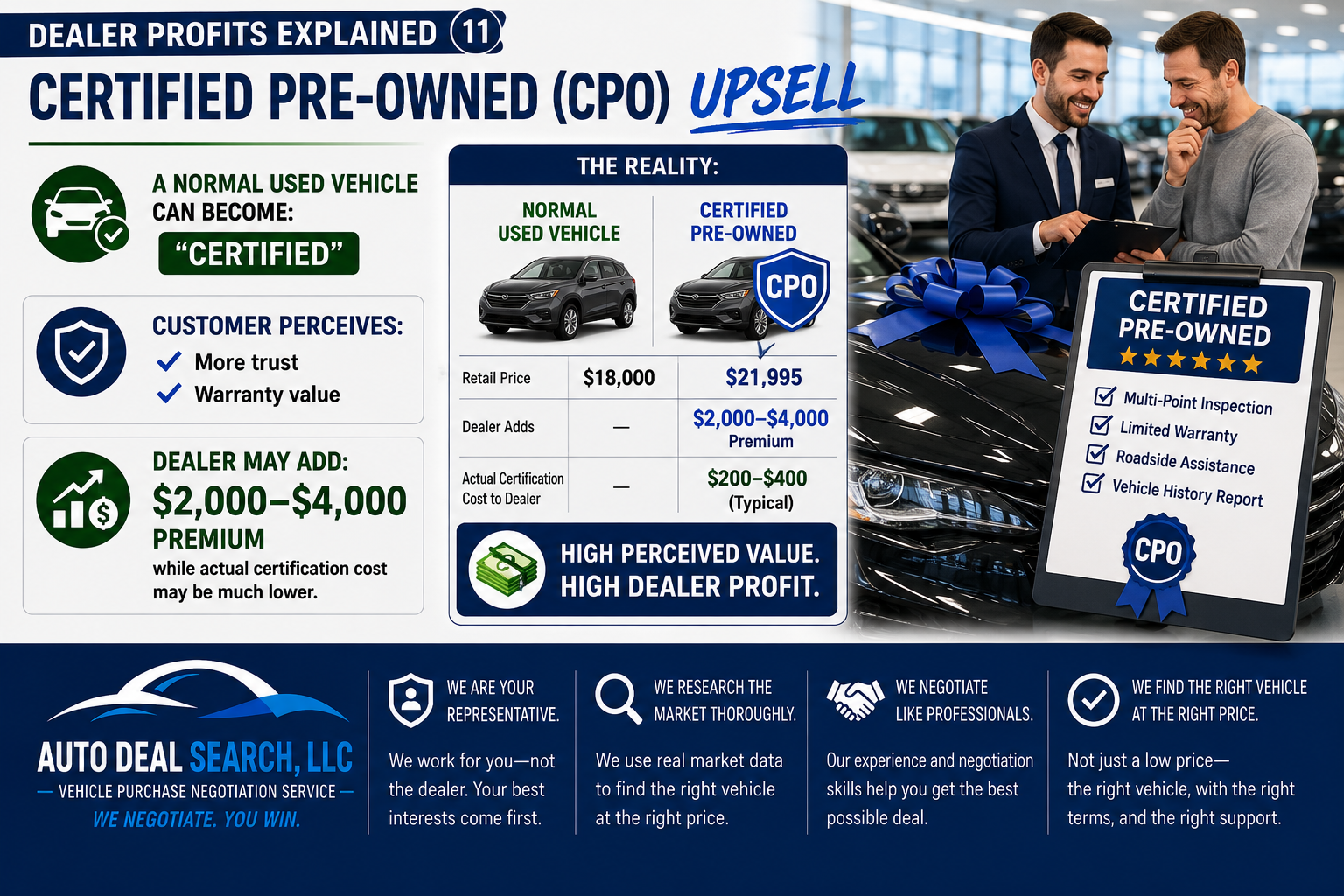
11. Certified pre-owned (CPO) upsell
A normal used vehicle can become : “Certified”
Customer perceives : More trust, Warranty value
Dealer may add : $2,000–$4,000 premium while actual certification cost may be much lower.
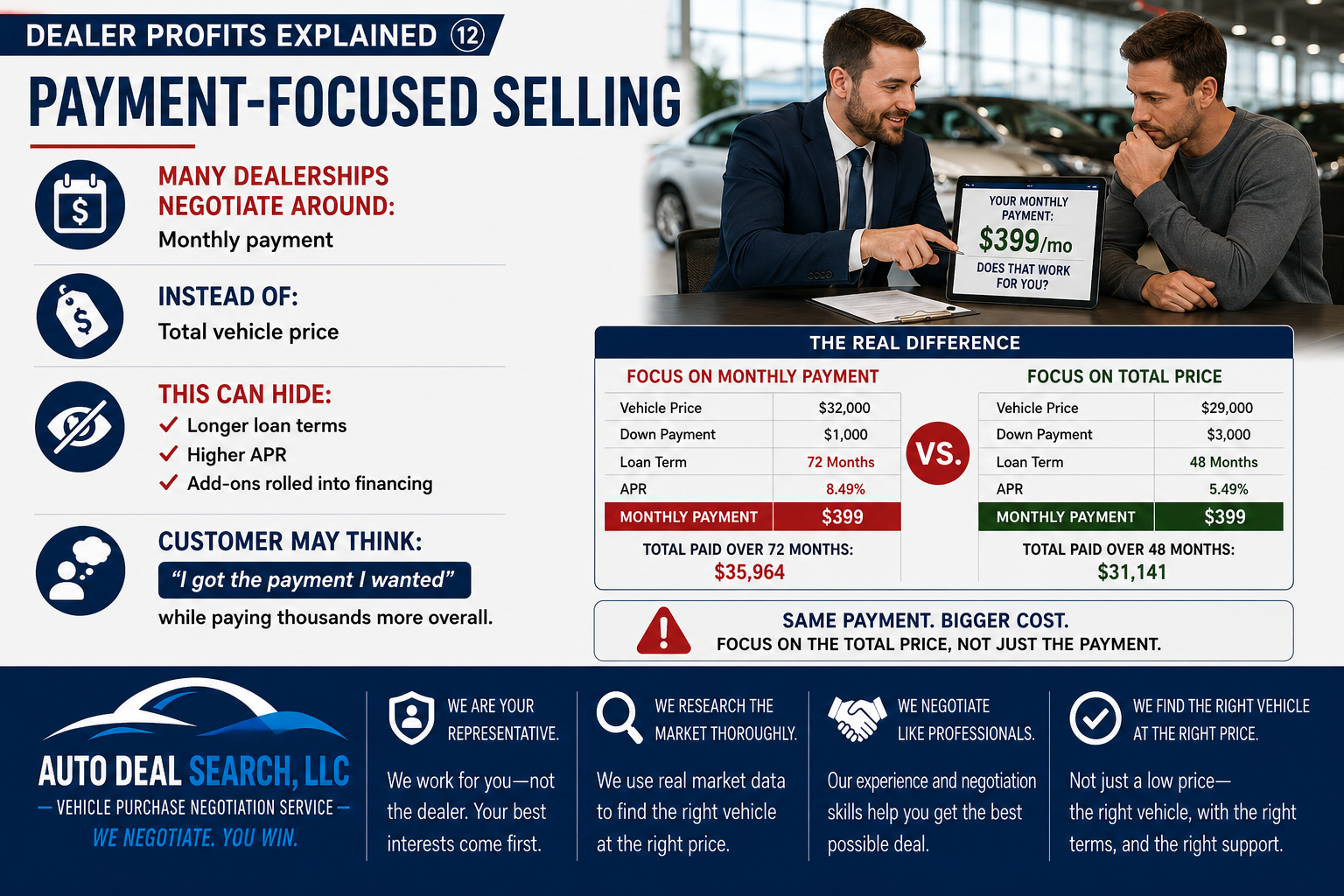
12. Payment-focused selling
Many dealerships negotiate around : Monthly payment
Instead of : Total vehicle price
This can hide : Longer loan terms, Higher APR, Add-ons rolled into financing
Customer may think : “I got the payment I wanted” while paying thousands more overall.
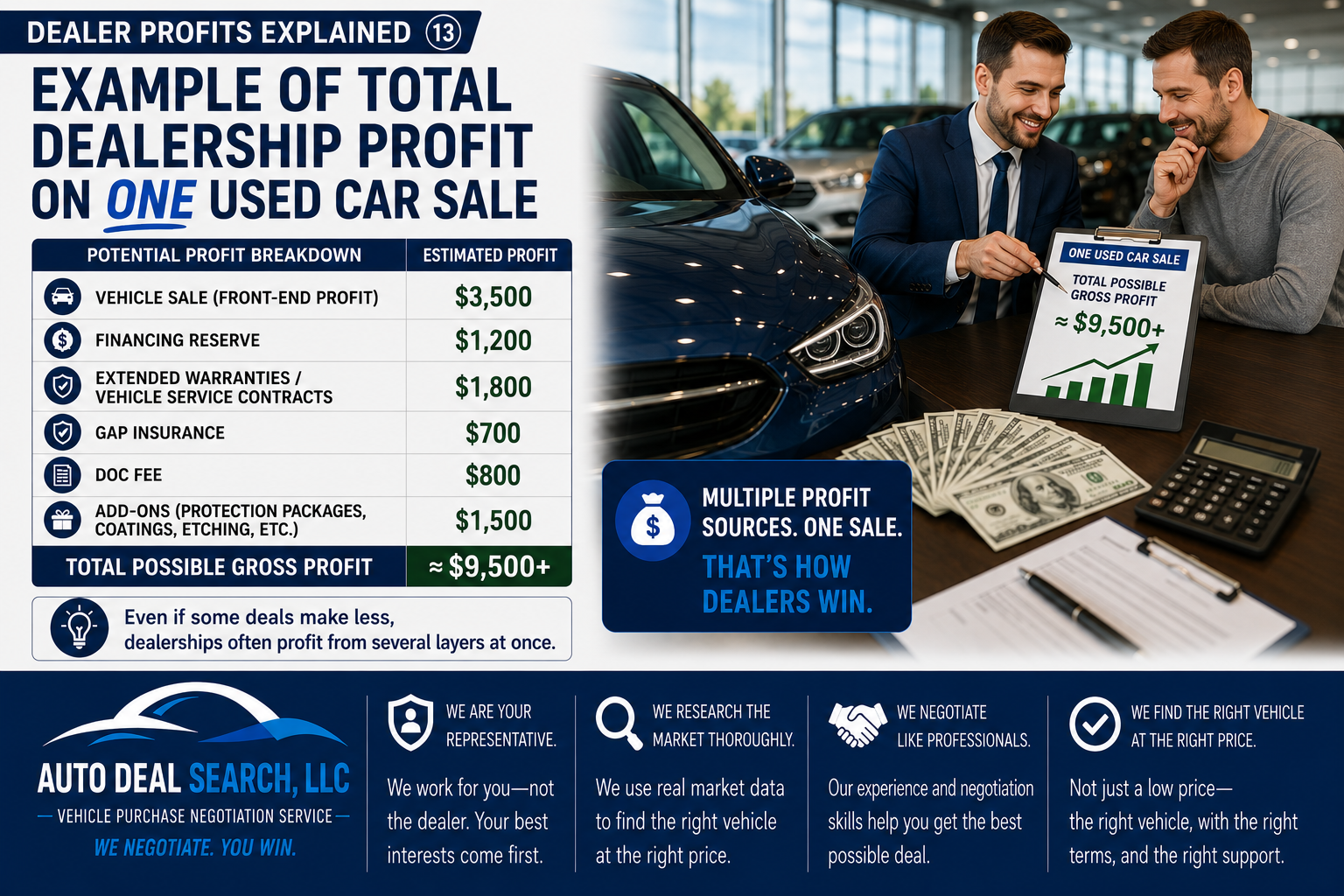
13. Example of total dealership profit on ONE used car sale
Vehicle Sale
Front-end profit : $3,500
Financing reserve : $1,200
Extended warranties / Vehicle service contracts : $1,800
GAP Insurance : $700
Doc fee : $800
Add-ons : $1,500
Total possible gross profit : ≈ $9,500+
Even if some deals make less, dealerships often profit from several layers at once.
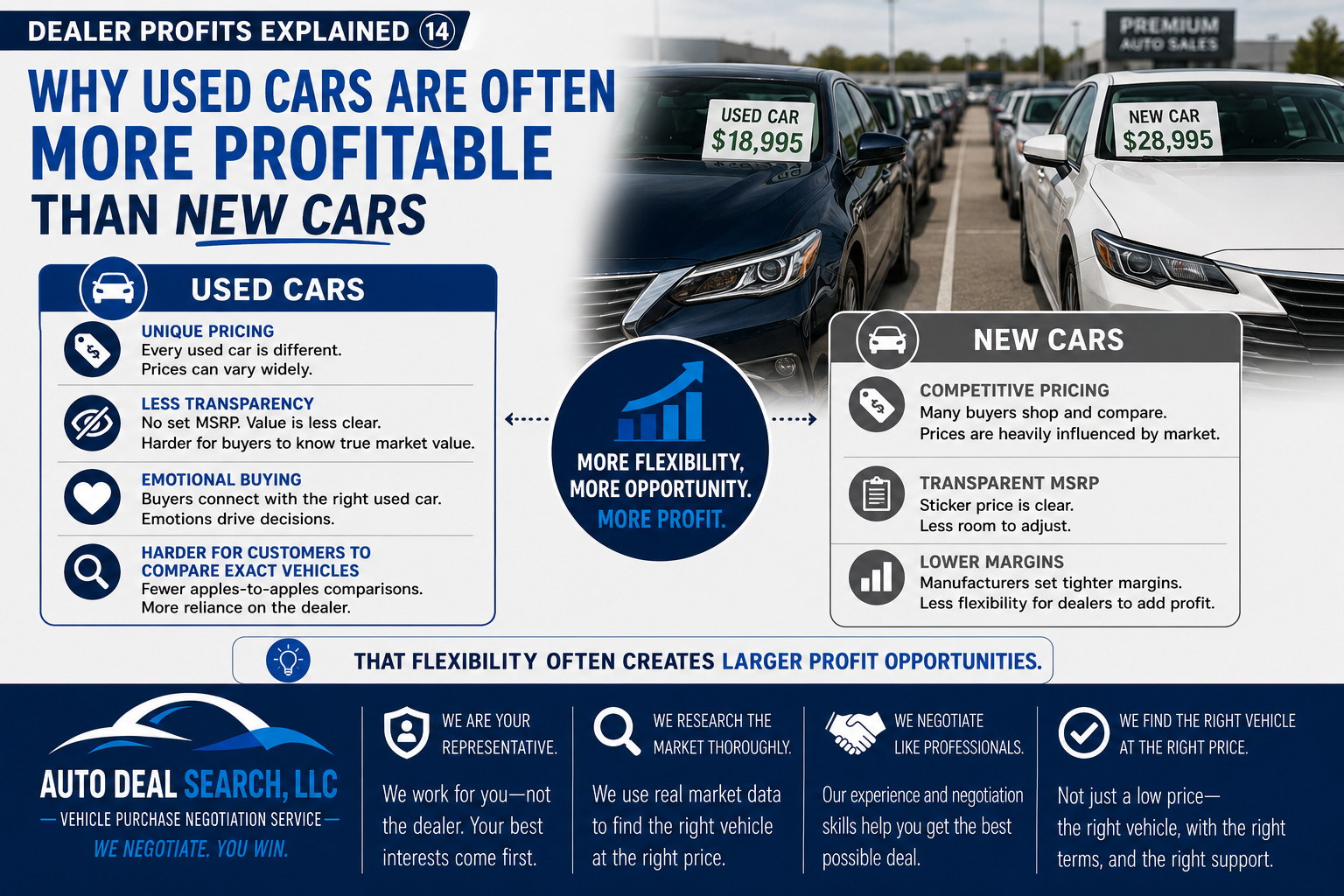
14. Why used cars are often more profitable than new cars
New cars : Competitive pricing, Transparent MSRP, Lower margins
Used cars : Unique pricing, Less transparency, Emotional buying, Harder for customers to compare exact vehicles
That flexibility often creates larger profit opportunities.
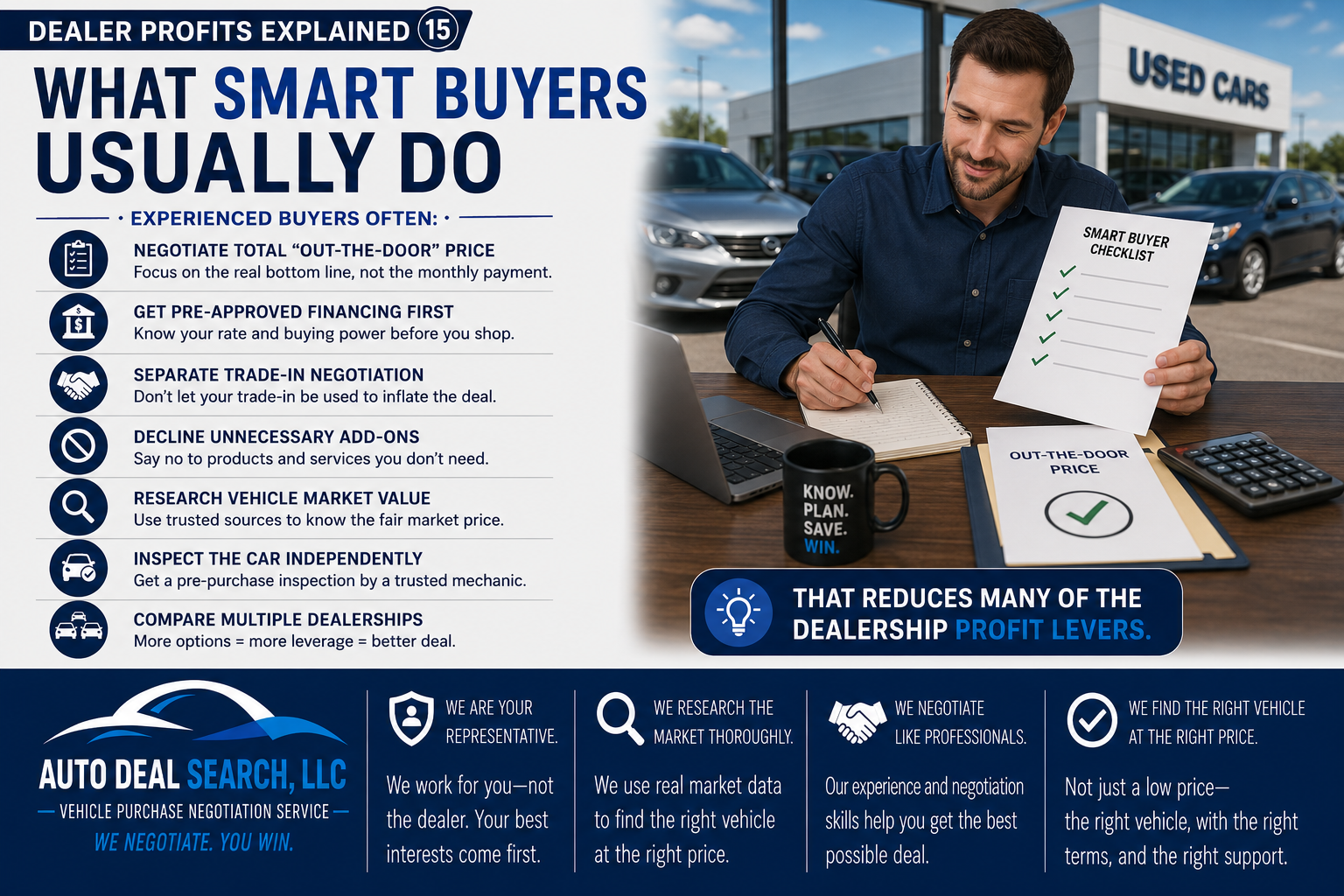
15. What smart buyers usually do
Experienced buyers often : Negotiate total “out-the-door” price, Get pre-approved financing first, Separate trade-in negotiation, Decline unnecessary add-ons,
Research vehicle market value, Inspect the car independently, Compare multiple dealerships
That reduces many of the dealership profit levers.