Here’s a breakdown of the main ways a car dealership makes money when selling a new vehicle.
Many customers think dealers only profit from the sticker price, but dealerships usually have multiple
profit sources in one transaction.
How New Car Sales Businesses Work

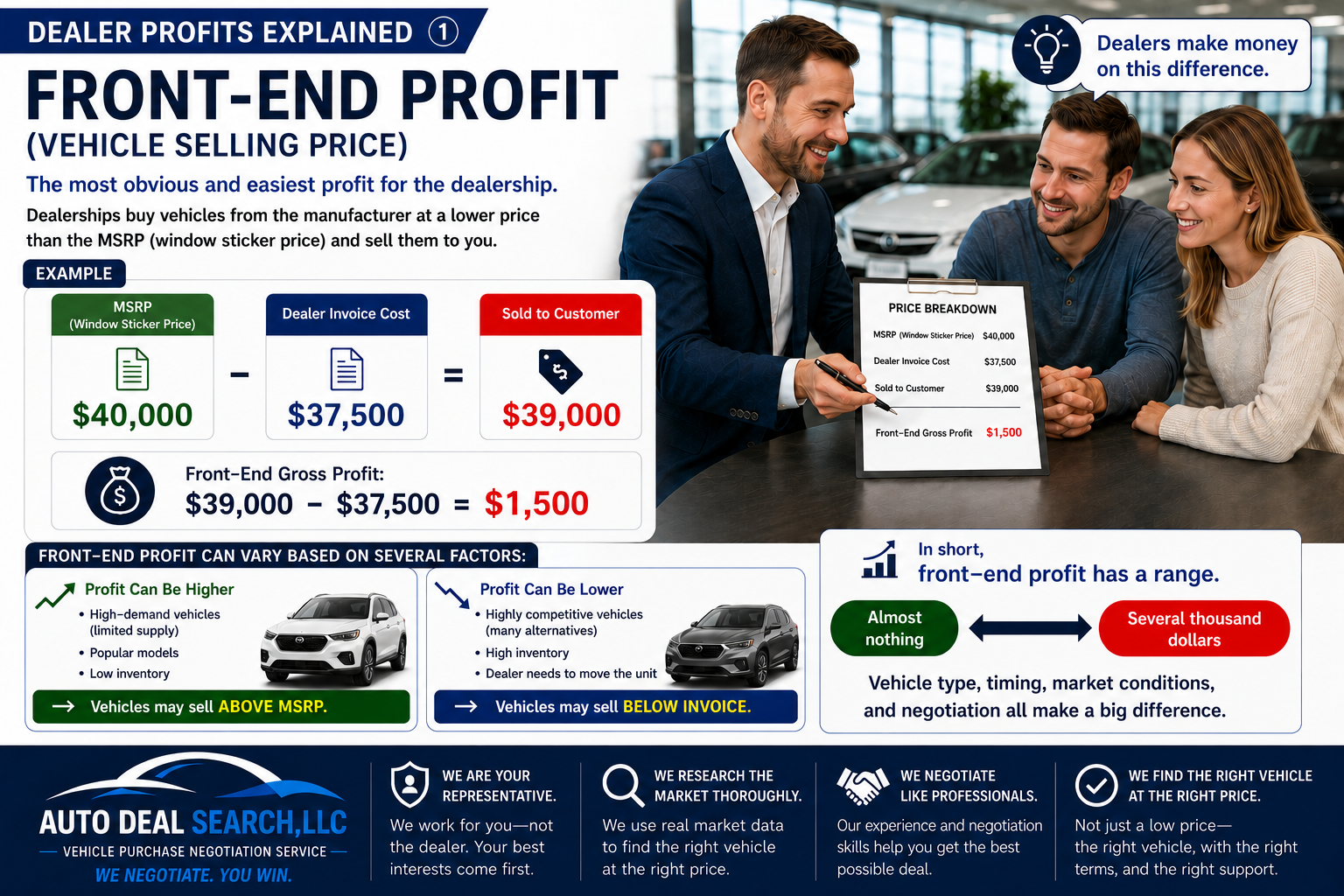
1. Front-end profit (Vehicle selling price)
This is the most obvious one.
The dealership buys the vehicle from the manufacturer at a lower amount than the MSRP (window sticker price).
(Example)
MSRP : $40,000
Dealer invoice cost : $37,500
Sold to customer : $39,000
Front-end gross profit : $39,000 − $37,500 = $1,500
However : Some high-demand vehicles may sell above MSRP, Some competitive vehicles may sell below invoice
So front-end profit can range from : Almost nothing to several thousand dollars
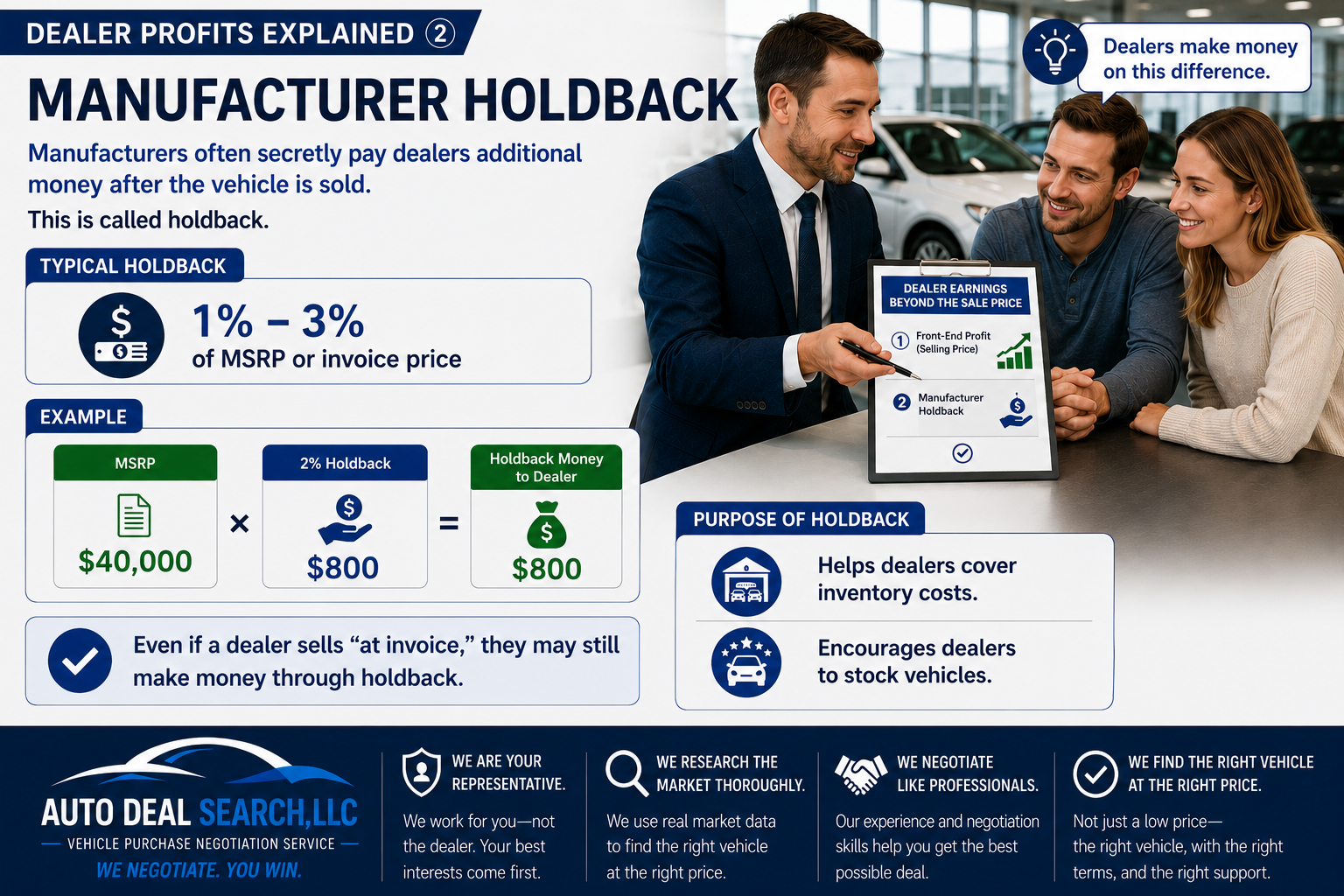
2. Manufacturer holdback
Manufacturers often secretly pay dealers additional money after the vehicle is sold.
This is called holdback.
Typical holdback : 1%–3% of MSRP or invoice price
(Example)
MSRP : $40,000
2% holdback = $800
Even if a dealer sells “at invoice,” they may still make money through holdback.
Purpose : Helps dealers cover inventory costs, Encourages dealers to stock vehicles
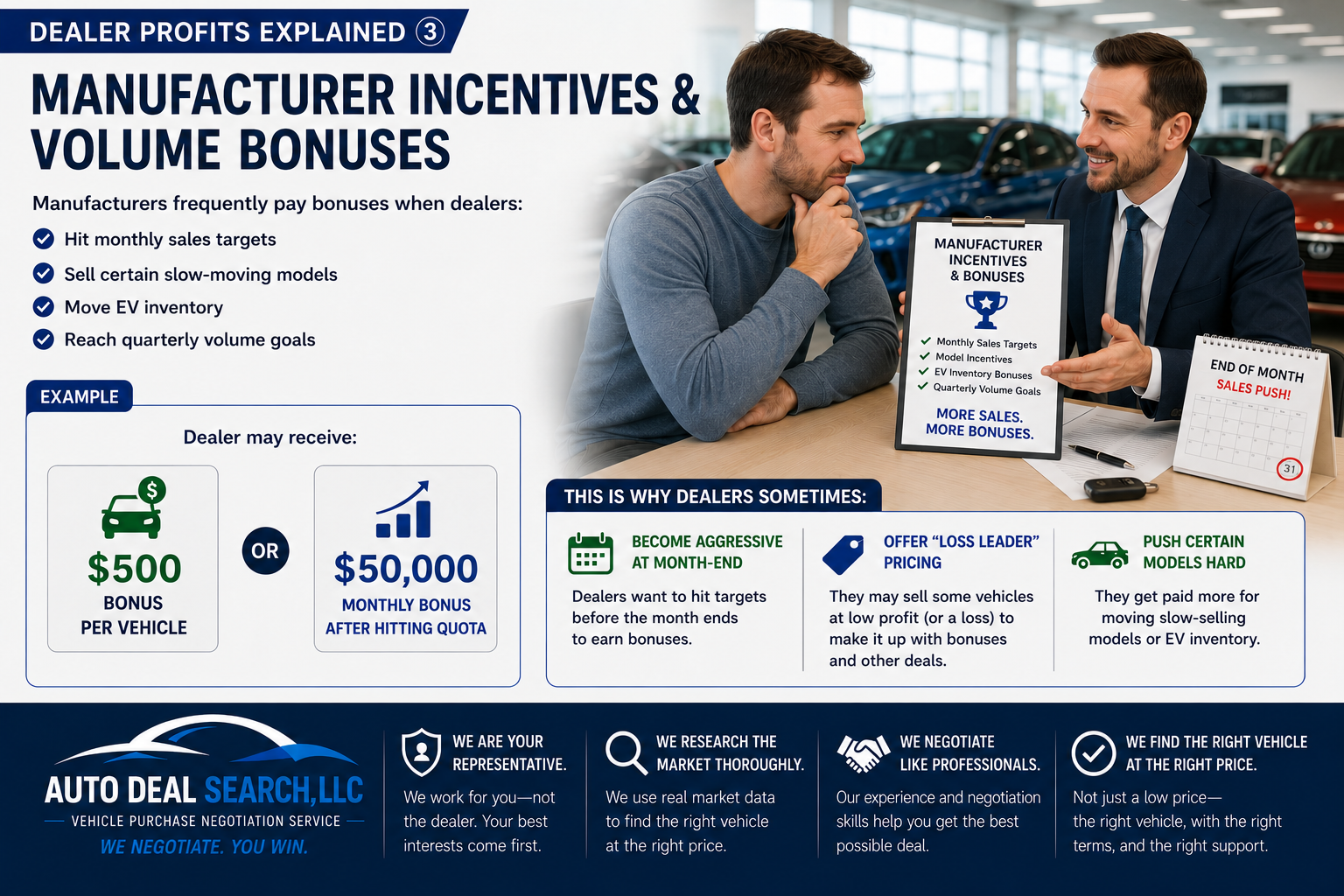
3. Manufacturer incentives & Volume bonuses
Manufacturers frequently pay bonuses when dealers : Hit monthly sales targets, Sell certain slow-moving models, Move EV inventory,
Reach quarterly volume goals
(Example)
Dealer may receive : $500 bonus per vehicle OR $50,000 monthly bonus after hitting quota
This is why dealers sometimes : Become aggressive at month-end, Offer “loss leader” pricing, Push certain models hard
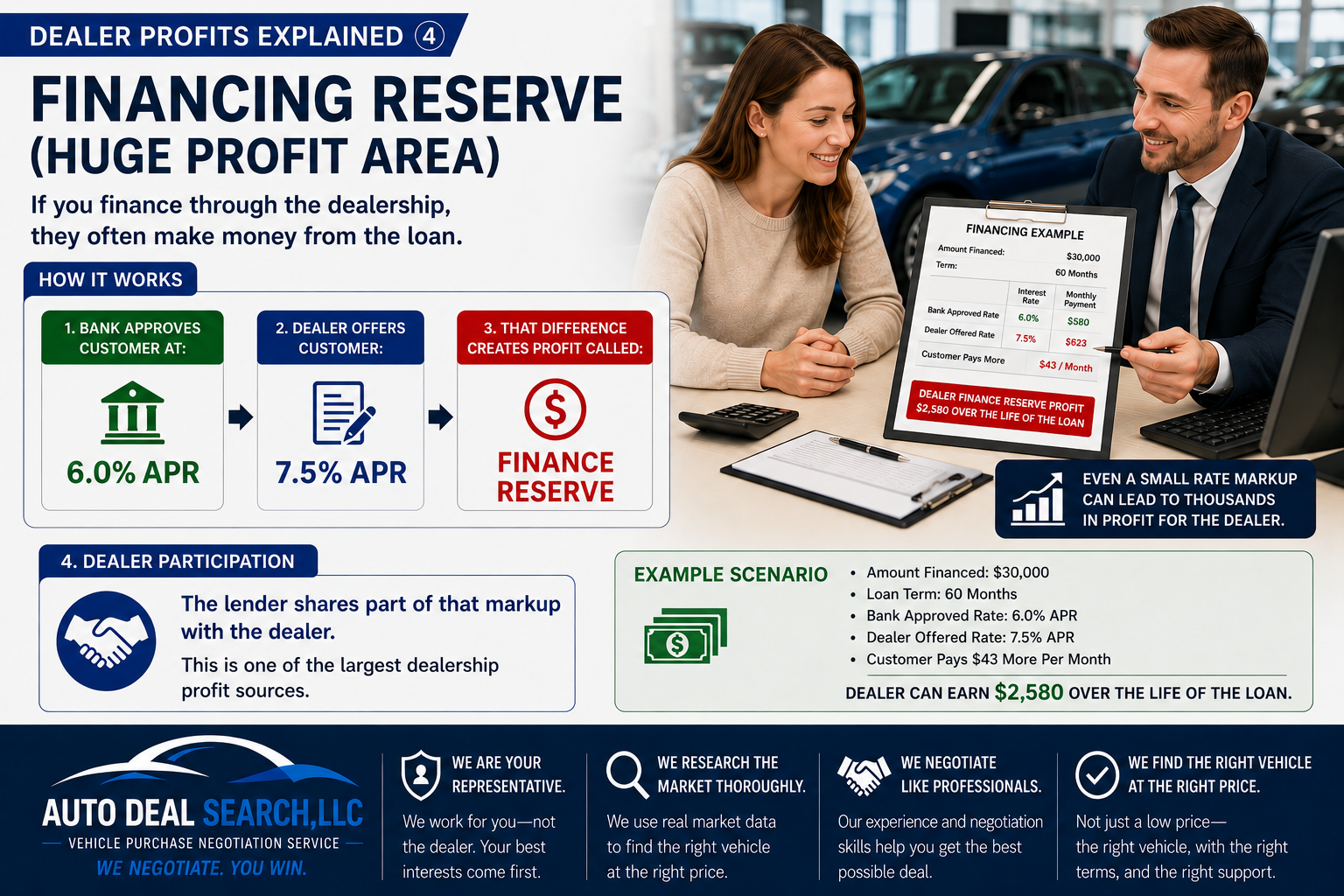
4. Financing reserve (Huge profit area)
If you finance through the dealership, they often make money from the loan.
(How it works)
Bank approves customer at : 6.0% APR
Dealer offers customer : 7.5% APR
That difference creates profit called : Finance reserve
Dealer participation
The lender shares part of that markup with the dealer.
This is one of the largest dealership profit sources.
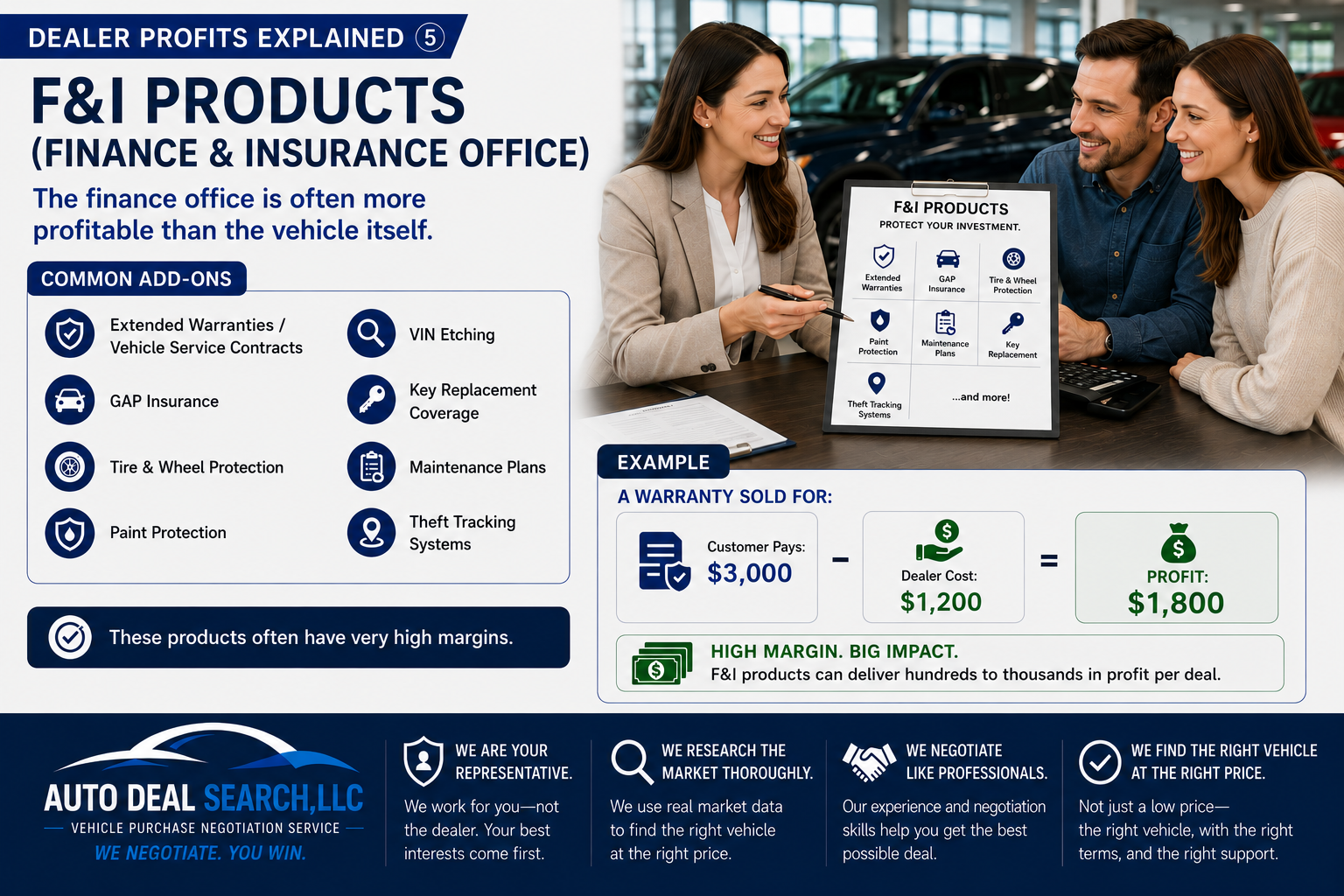
5. F&I Products (Finance & Insurance office)
The finance office is often more profitable than the vehicle itself.
Common add-ons : Extended warranties / Vehicle service contracts, GAP Insurance, Tire & wheel protection, Paint protection, VIN etching,
Key replacement coverage, Maintenance plans, Theft tracking systems
(Example)
A warranty sold for (Customer pays) : $3,000
Dealer cost : $1,200
Profit : $1,800
These products often have very high margins.
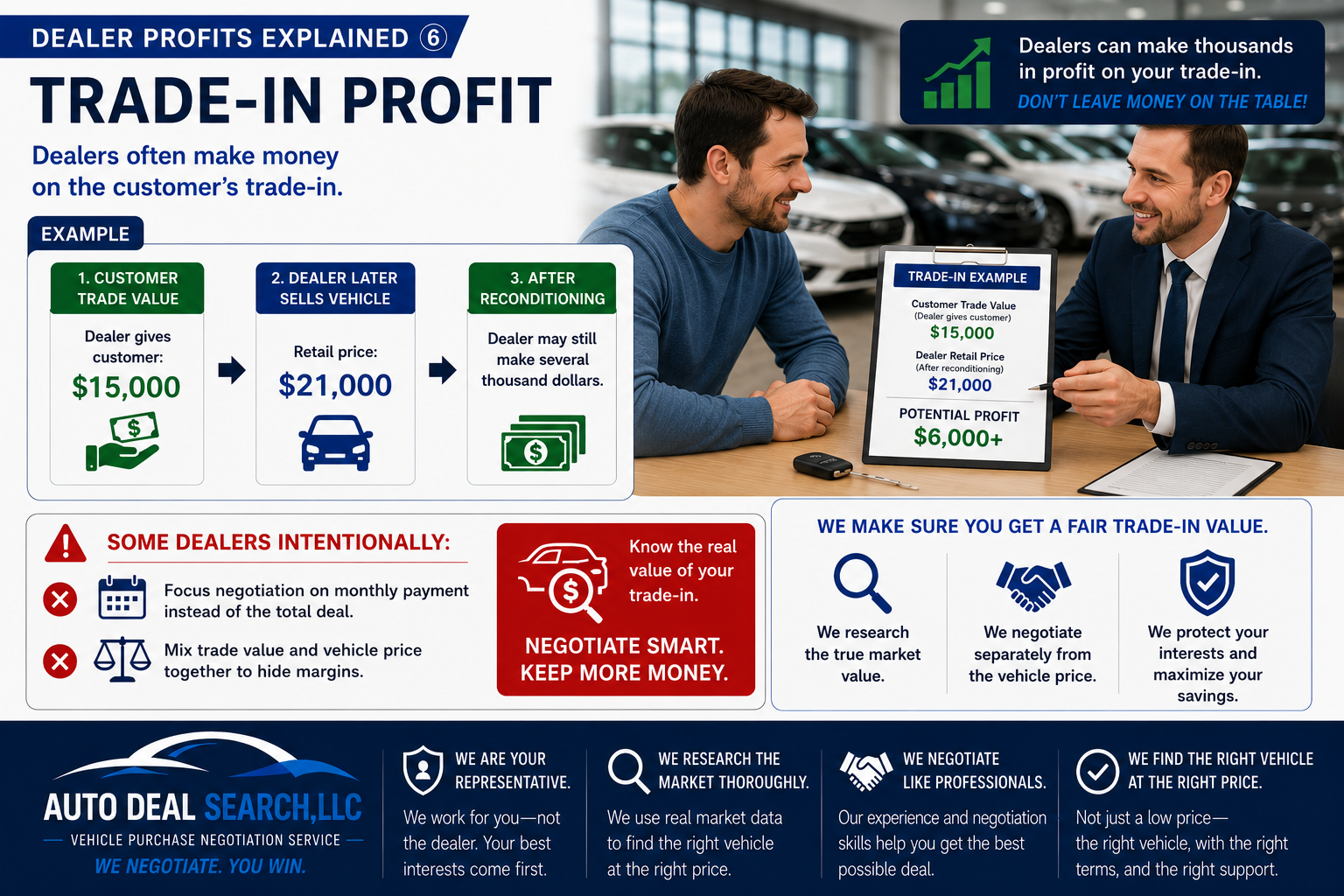
6. Trade-in profit
Dealers often make money on the customer’s trade-in.
(Example)
Customer trade actual cash value : $17,000
Dealer gives customer : $15,000
Dealer later sells vehicle
Retail price : $21,000
After reconditioning : Dealer may still make several thousand dollars
Some dealers intentionally : Focus negotiation on monthly payment, Mix trade value and vehicle price together to hide margins.
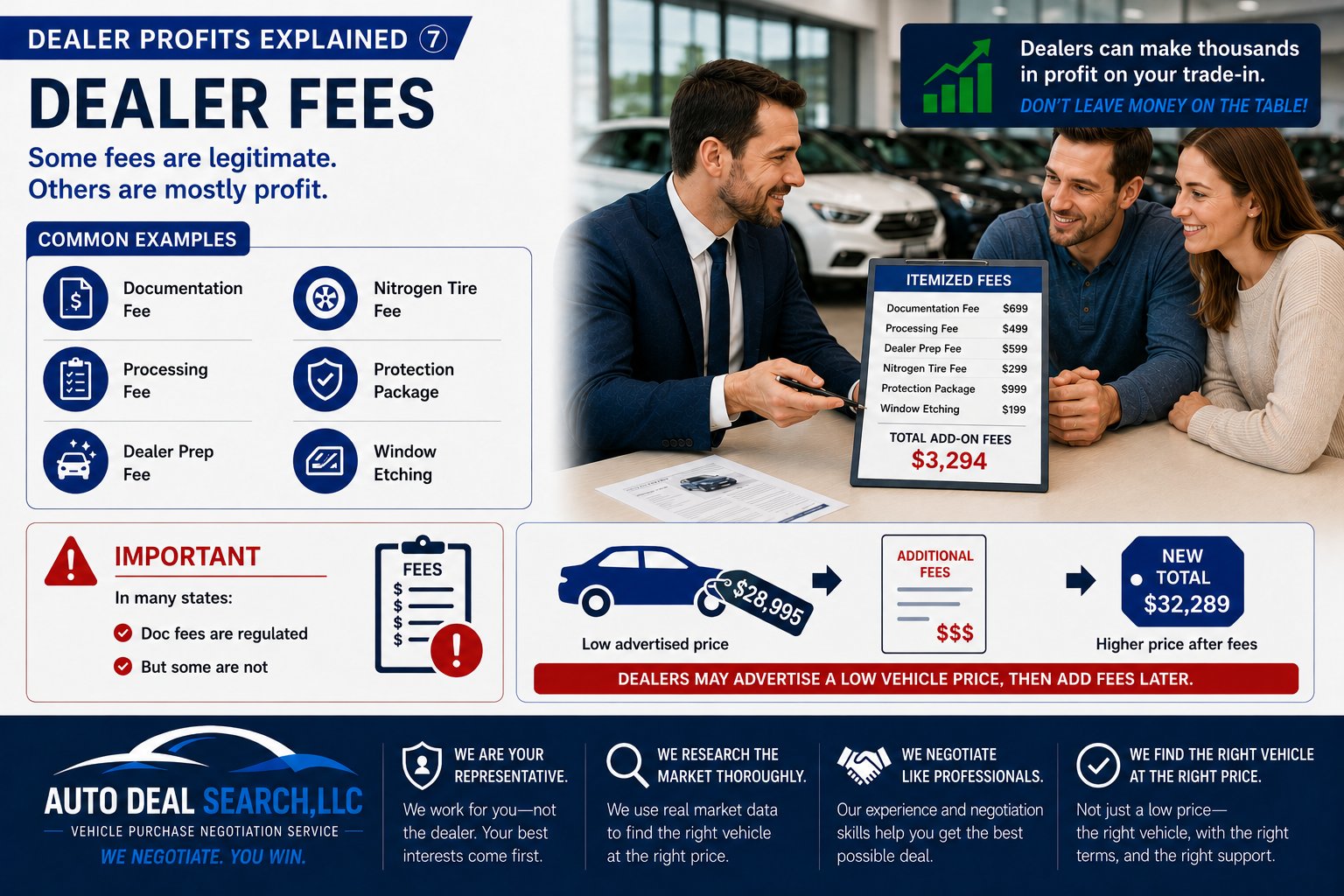
7. Dealer fees
Some fees are legitimate. Others are mostly profit.
Common examples : Documentation fee, Processing fee, Dealer prep fee, Nitrogen tire fee, Protection package, Window etching
(Important)
In many states : Doc fees are regulated, but some are not. Dealers may advertise a low vehicle price then add fees later.
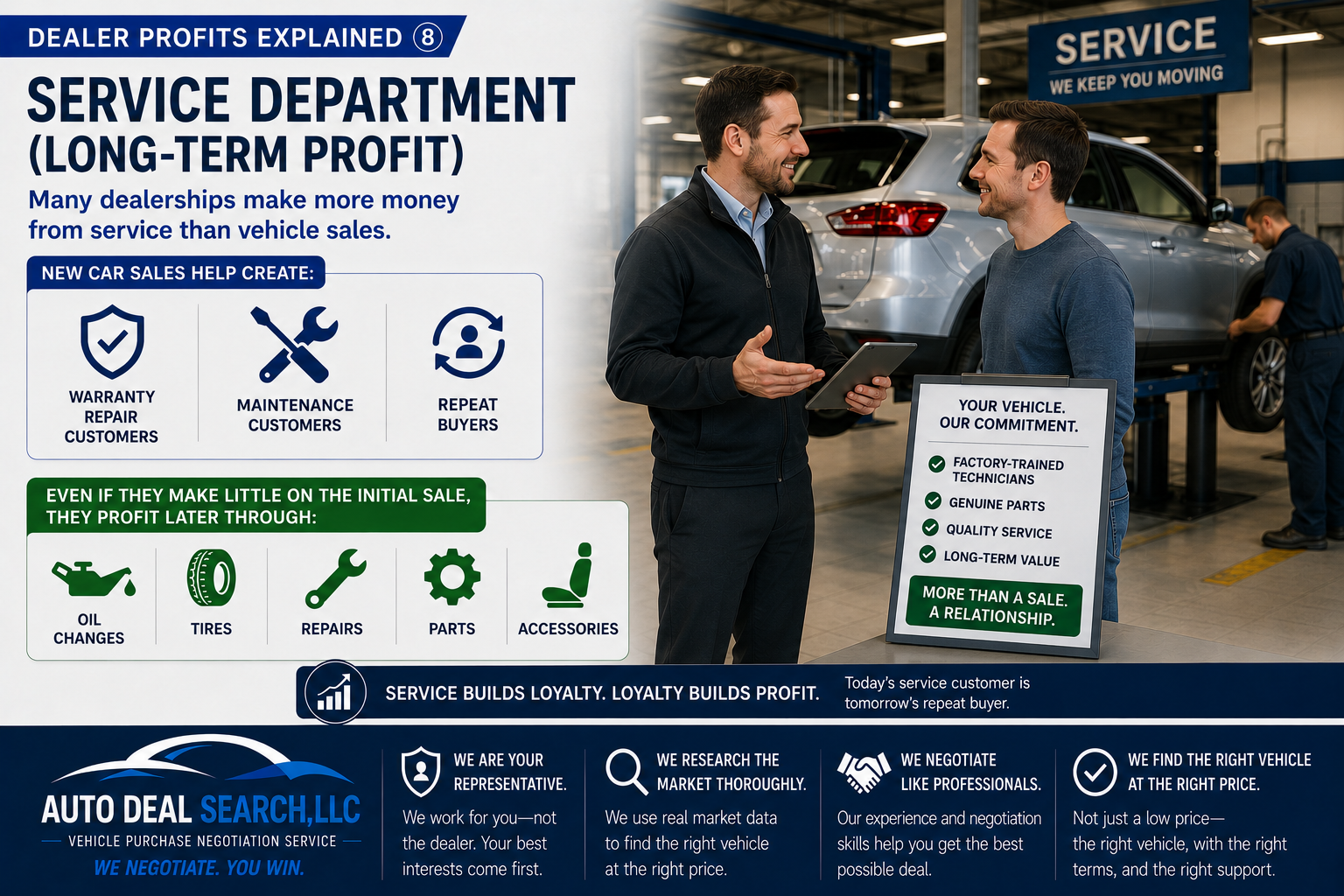
8. Service department (Long-term profit)
Many dealerships make more money from service than vehicle sales.
New car sales help create : Warranty repair customers, Maintenance customers, Repeat buyers
Even if they make little on the initial sale, they profit later through : Oil changes, Tires, Repairs, Parts, Accessories
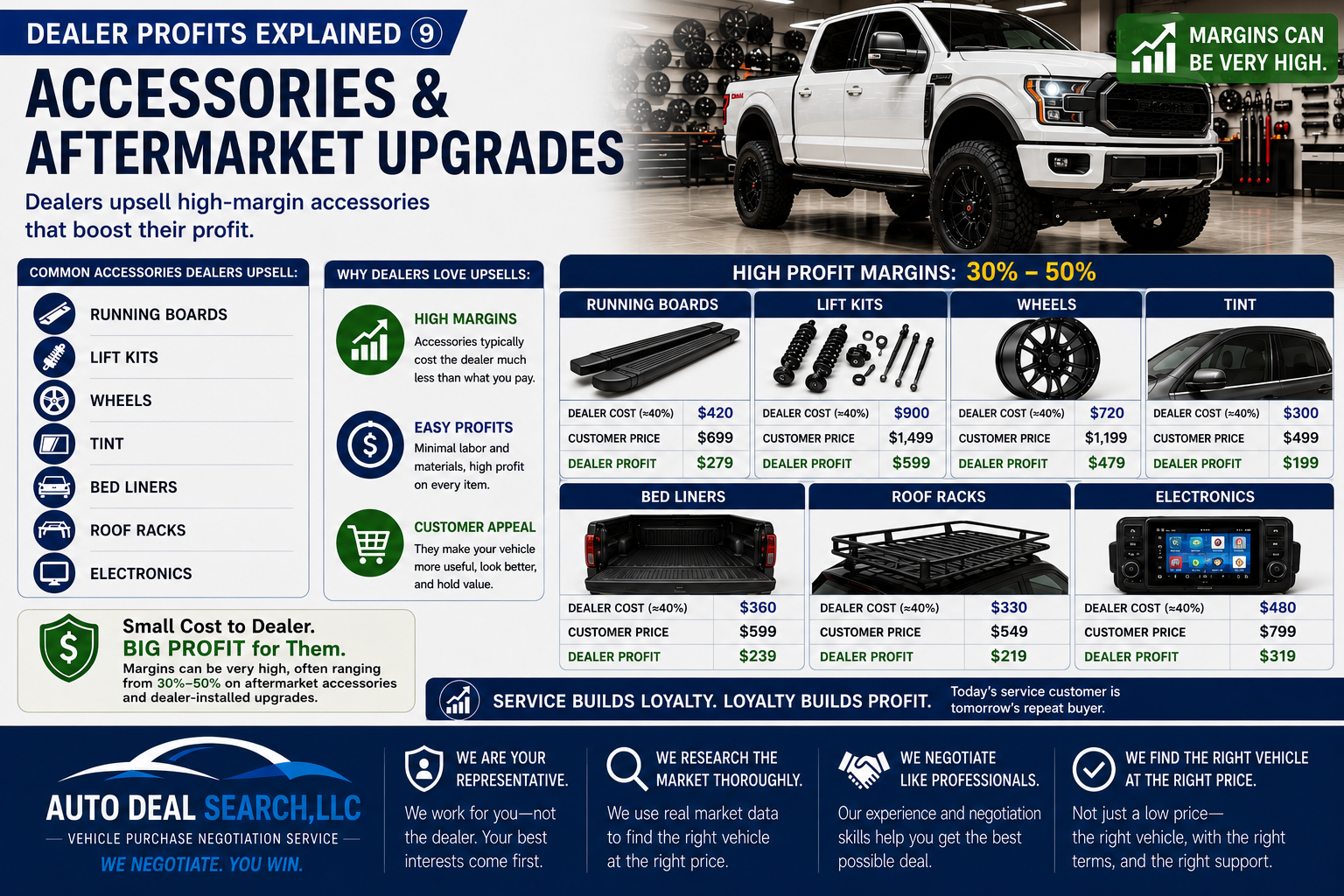
9. Accessories & Aftermarket upgrades
Dealers upsell : Running boards, Lift kits, Wheels, Tint, Bed liners, Roof racks, Electronics
Margins can be very high.
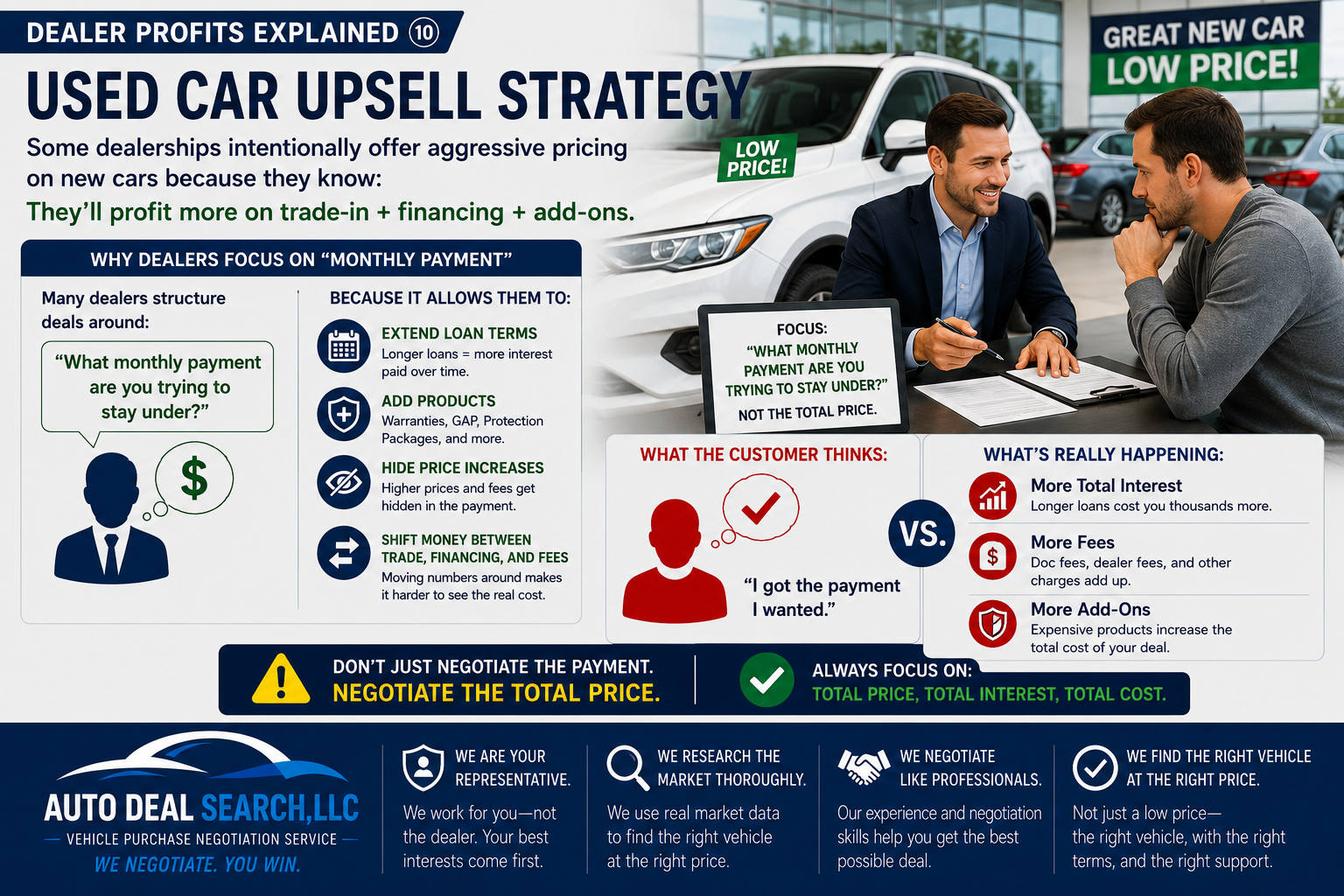
10. Used car upsell strategy
Some dealerships intentionally offer aggressive pricing on new cars, because they know : They’ll profit more on trade-in + financing + add-ons
Why dealers focus on "Monthly Payment"
Many dealers structure deals around : “What monthly payment are you trying to stay under?”
Because it allows them to : Extend loan terms, Add products, Hide price increases, Shift money between trade, financing, and fees
A customer may think “I got the payment I wanted” while actually paying : More total interest, More fees, More add-ons
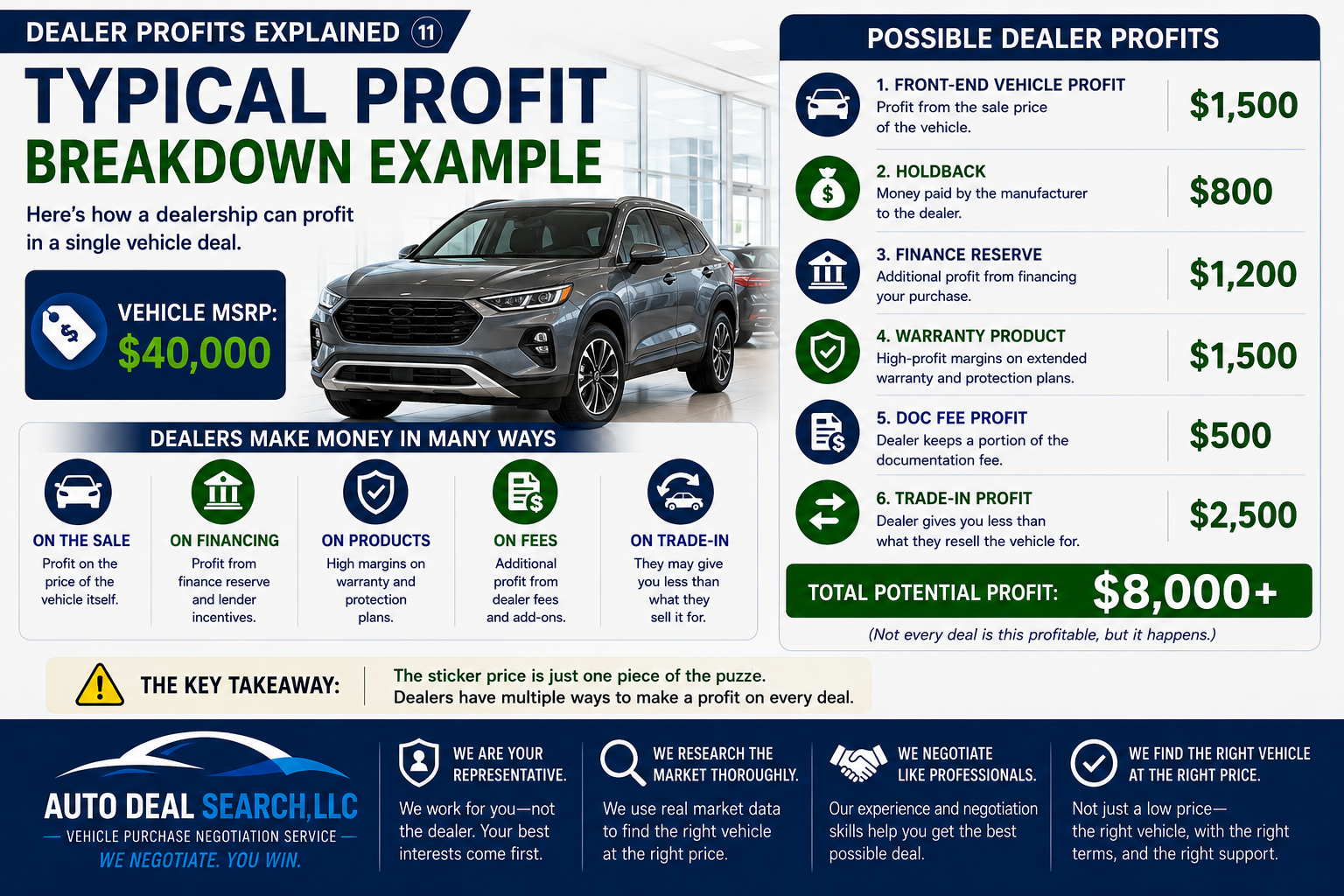
11. Typical profit breakdown example
Vehicle MSRP : $40,000
Possible dealer profits
Front-end vehicle profit : $1,500
Holdback : $800
Finance reserve : $1,200
Warranty product : $1,500
Doc fee profit : $500
Trade-in profit : $2,500
Total potential profit : $8,000+ (Not every deal is this profitable, but it happens.)
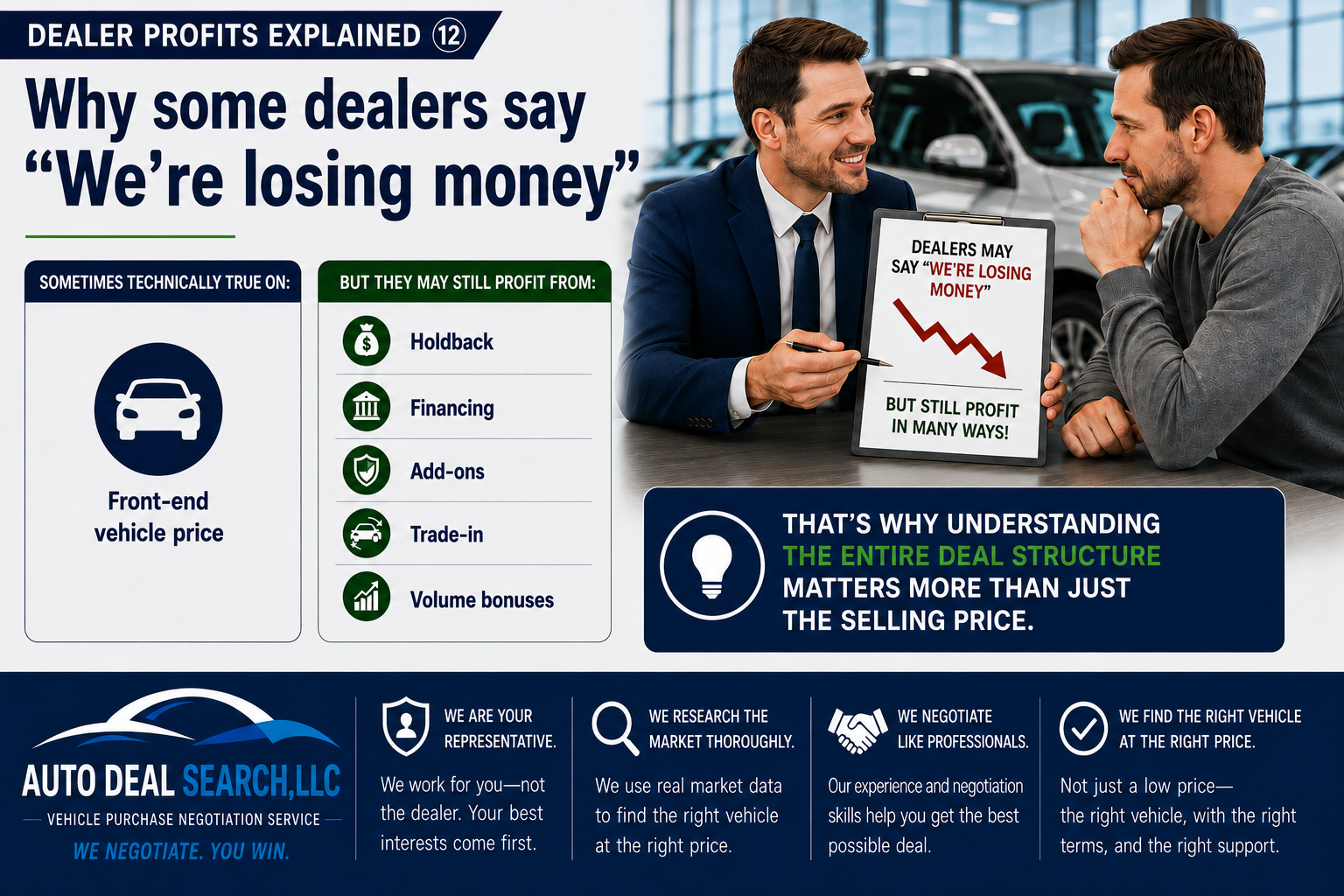
12. Why some dealers say “We’re losing money”
Sometimes technically true on : Front-end vehicle price
But they may still profit from : Holdback, Financing, Add-ons, Trade-in, Volume bonuses
That’s why understanding the entire deal structure matters more than just the selling price.
13. Best ways customers protect themselves
Negotiate vehicle price separately, Negotiate trade separately, Get pre-approved financing before visiting, Review every fee, Decline unwanted add-ons,
Focus on total out-the-door price, Read contracts carefully before signing